

Joel Fichera
Consultant
Joel Fichera
Consultant
On Adoption and Acceptance of Ideas

Image from Pixabay
Gartner Hype Cycle, Most Advanced Yet Acceptable, and Diffusion of Innovation are three pivotal concepts that apply to the adoption and acceptance of ideas at a group level (as opposed to an individual level). These are some useful mental models when approaching questions such as:
- What will people accept/adopt?
- How does the reaction of people change over time?
- Within groups, does everyone accept things equally?
These conceptual models have broad applicability often used in business contexts but valuable elsewhere also, further, while they are rooted in theory but actively useful in practice too.
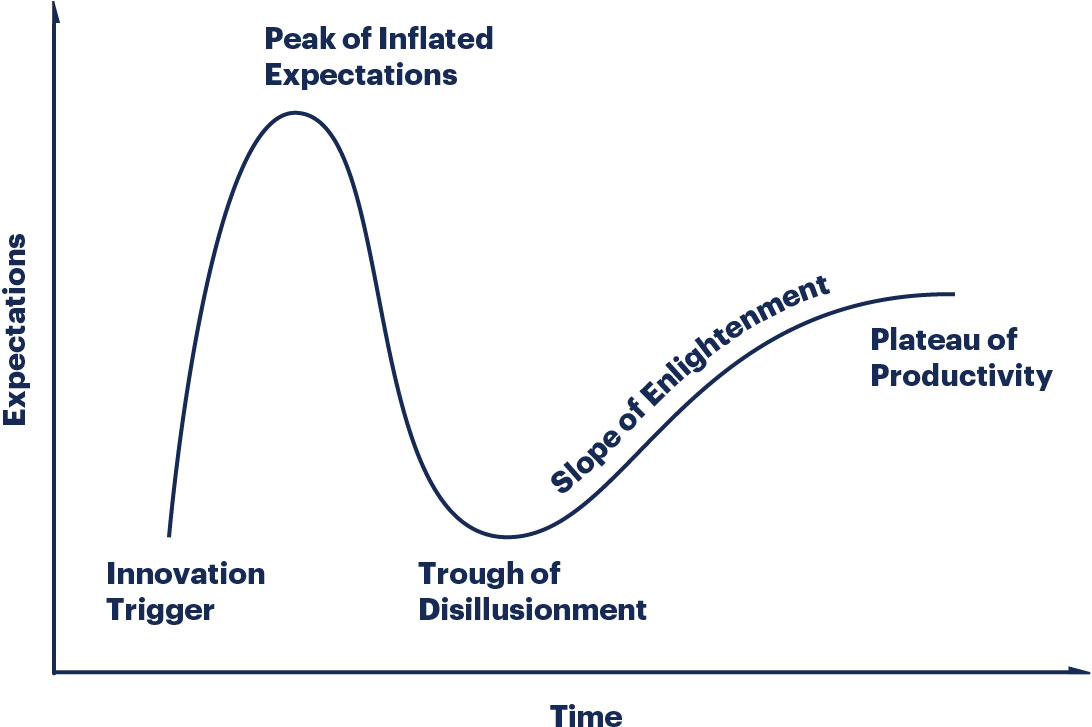
Diagram from Gartner
Gartner Hype Cycle
tl;dr: Whenever a promising new technology is developed the response to the commercialisation and potential of the technology often follows a very predictable order of five phases.
Why does it matter:
- The Hype Cycle helps to inform decisions around new technologies, whether to invest, to wait, and also provides a warning for those riding high on the ‘Peak of Inflated Expectations’
- Recent technologies that have gone through the cycle include IOT, Blockchain, and Big Data
- Specifically developed for describing the phases of technologies, but can be extended to almost any novel phenomena. I would argue we are at the peak of inflated expectations regarding work from home changes driven by COVID (as at 30 June 2020). Changes will absolutely occur but not to the level currently touted by many ‘thought leaders’.
Link: https://www.gartner.com/en/research/methodologies/gartner-hype-cycle
But also this Link: https://thinkgrowth.org/one-thing-everybody-forgets-about-gartners-hype-cycle-ecfe7e9de8ff

Photo by gdtography from Pexels
Most Advanced Yet Acceptable
tl;dr: People like the familiar and the new. Most Advanced Yet Acceptable is a reminder to balance these.
Why does it matter:
- Comes from Raymond Loewy, father of industrial design, whose firm developed icons like the Exxon Logo, the Lucky Strike Pack, the Greyhound bus, and even the livery on Air Force One
- It captures the tension between the curiousity/fear of new things – he said to sell something surprising, make it familiar; and to sell something familiar, make it surprising.
- It still has applicability today, in a world of personalisation and recommendation this principle continues to remain relevant – the ‘Made for You’ playlists in Spotify, the ‘Up Next’ recommendations in Netflix and Amazon Prime, and even the ‘Recommended for You’ section in UberEats.
Link: https://www.theatlantic.com/magazine/archive/2017/01/what-makes-things-cool/508772/
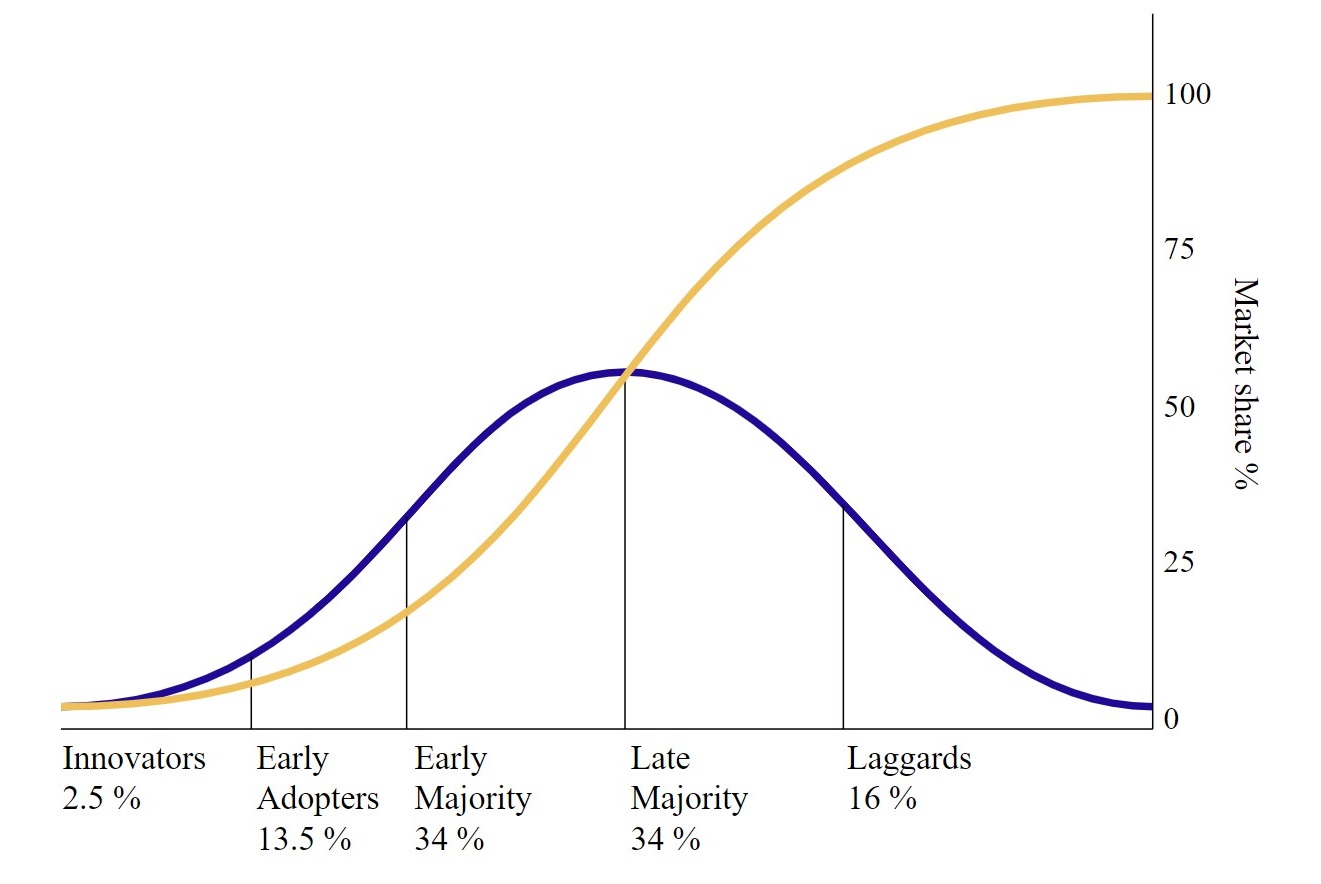
Based on Rogers, E. (1962) Diffusion of innovations. Free Press, London, NY, USA
Diffusion of Innovations / Adoption Curve
tl;dr: People have differing levels of likelihood to adopt an innovation, this can be broken into 5 key groups that largely follow a bell-curve, each with specific characteristics and catchy names.
Why does it matter:
- Based on work by Everett Rogers originally published in 1962, the thrust of the argument is that innovation is communicated over time and diffuses through groups
- The 5 key groups range from Innovators to Laggards, with the criteria for categorisation being the level to which the individuals adopts a new idea
- Often applied to the adoption of new technologies/innovations, the model can also be useful in areas such as marketing (diffusion of new products), change management (diffusion of new ideas), and political science (diffusion of new policy acceptance)
Link: https://medium.com/the-political-informer/the-rogers-adoption-curve-how-you-spread-new-ideas-throughout-culture-d848462fcd24
< Read Articles by Me
More Reading Recommendations >
Why Make a Personal Website
Firstly, to see if I could, in spite of mysterious 500 internal server errors. Secondly, to create somewhere I can write publicly, the knowledge others can read my work motivates me to produce better work.

Contact
Email: Joelfichera@gmail.com
Linkedin: linkedin.com/in/joelfichera/
Location: Carlton, Melbourne, Victoria
Contact
Email: Joelfichera@gmail.com
Linkedin: linkedin.com/in/joelfichera/
Location: Carlton, Melbourne, Victoria